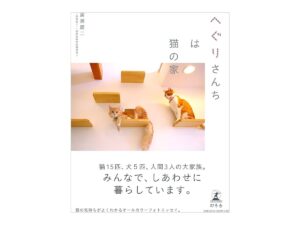
In 2009, a home designed for cats was completed in Kobe, Japan.
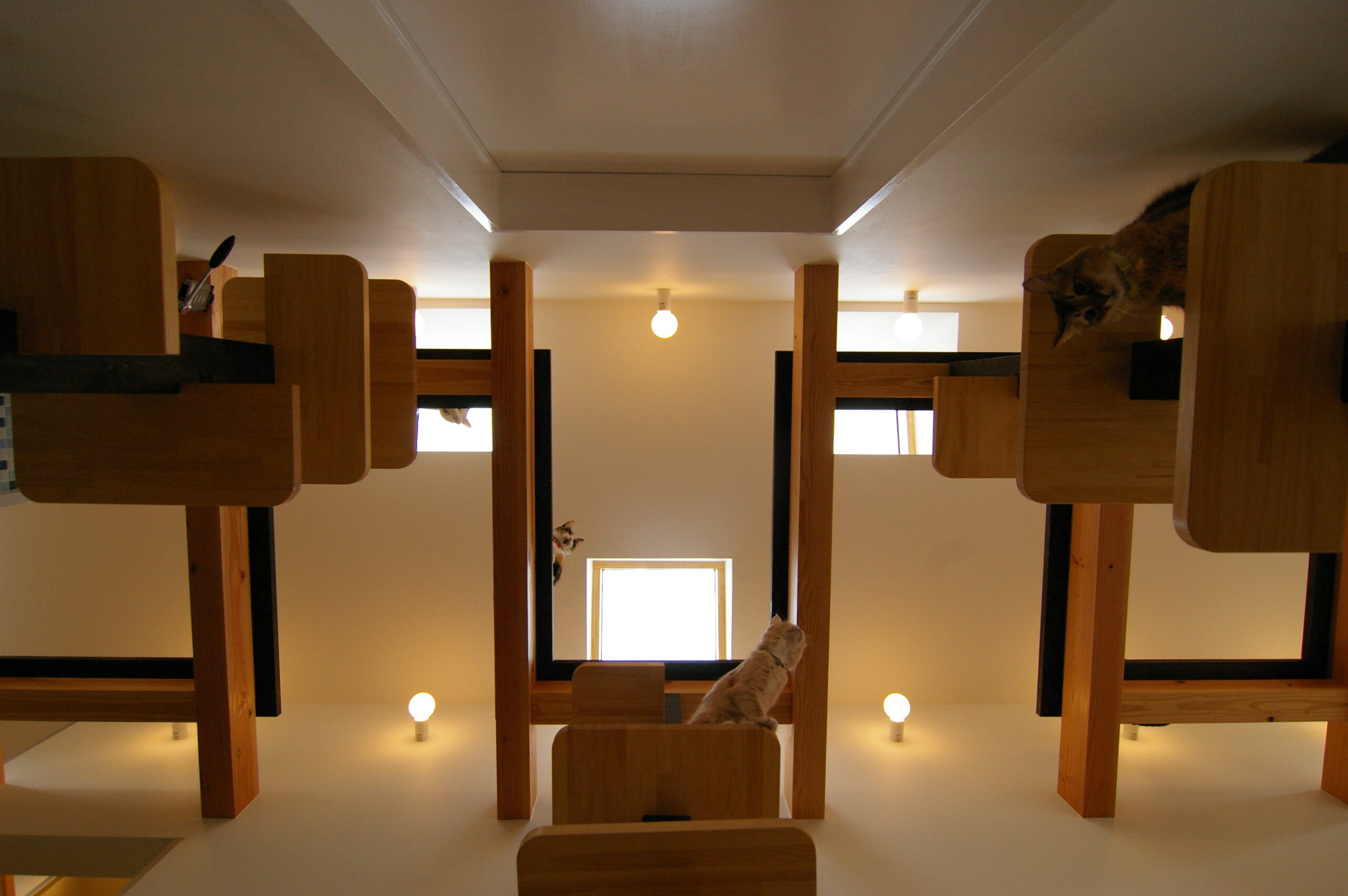
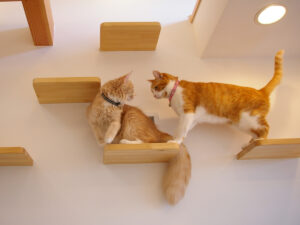
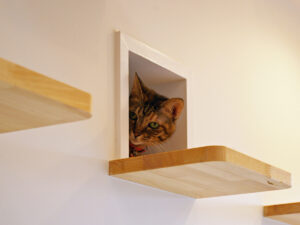
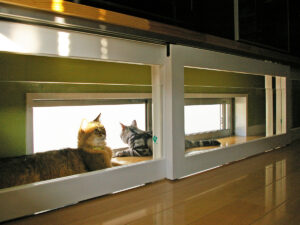
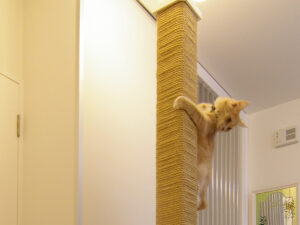
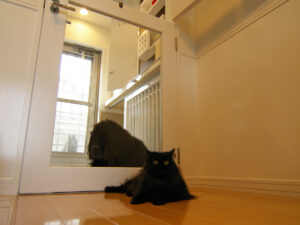
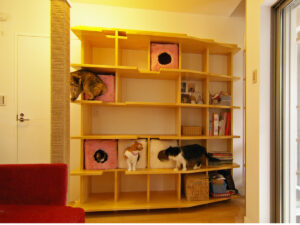
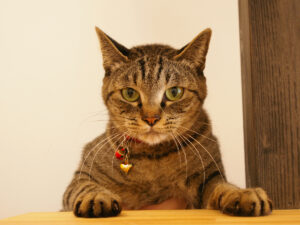
Designed by architect Keiji Hirose, this house represents Japan's first full-scale integration of feline behavioral science and architectural design. Catwalks, cat trees, dedicated movement paths, layered territorial zones——inside this house exists a "town" built for cats. Elevated passages, high vantage points, hidden alleyways. Environmental enrichment for cats, realized through architecture itself.
Home to 15 cats and 5 dogs, this house was not designed by adding things "for cats"——it was conceived as a city in miniature. And beyond that lies its core idea: to create a space where cats truly feel it is their Home.
A record that offers one answer to what it means to live with cats. Photographed September–November 2009.
CAST
■名前:まる(馬琉)
■種類:アメリカン・ショートヘア 男の子
■年齢:8ヶ月
■紹介:超天真爛漫。おまえには何にも悩み事ないの?たくさん写ってます。
■Name: Maru (馬琉)
■Breed: American Shorthair, male
■Age: 8 months
■Profile: Utterly carefree. Do you ever worry about anything? Appears in many photos.
■名前:かい(櫂)
■種類:ノルウェージャンフォレストキャット 男の子
■年齢:11ヶ月
■紹介:超綺麗。特に目が綺麗!去勢したが遅かりし、[はな]を身ごもらせてしまった。
■Name: Kai (櫂)
■Breed: Norwegian Forest Cat, male
■Age: 11 months
■Profile: Exceptionally beautiful — especially his eyes! Was neutered, but too late: he had already made Hana pregnant.
■名前:はな(華)
■種類:mix 女の子
■年齢:2才
■紹介:とても気が強いおんなの子。只今妊娠中。旦那さんは[かい君]。
■Name: Hana (華)
■Breed: Mix, female
■Age: 2 years
■Profile: A very strong-willed girl. Currently pregnant. Her partner is Kai.
■名前:れん(恋)
■種類:ソマリ 男の子
■年齢:4才
■紹介:おまえは犬か?と思うくらい呼べばすぐに飛んで来るかしこい子。母さんの側が定位置のやきもちやき。
■Name: Ren (恋)
■Breed: Somali, male
■Age: 4 years
■Profile: So responsive when called, you'd think he was a dog. A smart boy who is always jealous and stays glued to his owner's side.
■名前:しろみ
■種類:ペルシャ 女の子
■年齢:4才
■性格:だれともつるまない性格。[あい]と姉妹です。最近前歯全部を歯槽膿漏で抜きました。
■Name: Shiromi
■Breed: Persian, female
■Age: 4 years
■Profile: A loner who doesn't hang out with anyone. Sisters with Ai. Recently had all her front teeth removed due to periodontal disease.
■名前:あい
■種類:ペルシャ 女の子
■年齢:4才
■紹介:唯一お姉ちゃんの部屋で一緒に住んでいる子。理由は[まりこ]に追い回され咬まれるから。
■Name: Ai
■Breed: Persian, female
■Age: 4 years
■Profile: The only cat living in the daughter's room — because Mariko chases and bites her.
■名前:ぎんた
■種類:mix 男の子
■年齢:5才
■紹介:仔猫時代はとっても可愛いらしい顔でしたが、最近「やくざ顔」に変化したとかしないとか。
■Name: Ginta
■Breed: Mix, male
■Age: 5 years
■Profile: Had an adorable face as a kitten, but people say he's lately developed more of a "tough guy" look.
■名前:ちなつ
■種類:mix 男の子
■年齢:5才
■紹介:お客さんが大好き。超マイペース。誰だって好きにならざるを得ない個性。たくさん写ってます。
■Name: Chinatsu
■Breed: Mix, male
■Age: 5 years
■Profile: Loves visitors. Totally at his own pace. A personality everyone can't help but adore. Appears in many photos.
■名前:こはる
■種類:mix 女の子
■年齢:5才
■紹介:仔猫時代に顔面を強打したせいか、頻繁にくしゃみ→鼻水・ハナクソを飛ばすので掃除が大変。でも元気。
■Name: Koharu
■Breed: Mix, female
■Age: 5 years
■Profile: Possibly from a face injury as a kitten, she sneezes constantly — sending snot flying everywhere, which makes cleaning a challenge. But she's full of energy!
■名前:えり
■種類:mix 男の子
■年齢:6才
■紹介:いつも何処かに隠れてます。故にあまり写っていない。夜は[ちなつ]と立ち喧嘩。見てると面白いらしい。
■Name: Eri
■Breed: Mix, male
■Age: 6 years
■Profile: Always hiding somewhere — that's why he barely appears in photos. At night, he and Chinatsu have "standing fights." Apparently it's entertaining to watch.
■名前:まりこ
■種類:mix 女の子
■年齢:6才
■紹介:窓を開けるのがとっても上手で、よく家出をしたがる。でも必ず帰ってきます。(現在、家出は不可能です)
■Name: Mariko
■Breed: Mix, female
■Age: 6 years
■Profile: Skilled at opening windows and loves trying to run away — but she always comes back. (Currently, escape is impossible.)
■名前:たま
■種類:mix 男の子
■年齢:9才
■紹介:僕一番・お母さんっ子一番、何でも一番。仔猫時代は身体にオーラが見える程綺麗だったとのこと。
■Name: Tama
■Breed: Mix, male
■Age: 9 years
■Profile: Always number one — first in the heart of his owner. As a kitten, people say his body seemed to have an almost visible aura of beauty.
■名前:ある
■種類:mix 男の子
■年齢:10才
■紹介:いじめられっ子。「あるの部屋」の主。たまに両手で、はずかしはずかしをする黒白の綺麗っ子。
■Name: Aru
■Breed: Mix, male
■Age: 10 years
■Profile: The timid one. Master of "Aru's room." A pretty black-and-white boy who sometimes covers his face with both paws shyly.
■名前:りゅう
■種類:mix 男の子
■年齢:12才
■紹介:肥満1位・9.2kg。[れん]に目の敵にされ、頭を咬まれて病院通い。たくさん居るといろいろあるものです。
■Name: Ryu
■Breed: Mix, male
■Age: 12 years
■Profile: Ranking #1 in obesity at 9.2 kg! Often targeted by Ren and has had his head bitten, requiring trips to the vet. That's life with many cats.
■名前:ひな
■種類:mix 女の子
■年齢:12才
■紹介:落ち着きのある、とても綺麗な子。[あい]と一緒にいることが多い。頻度は少ないが、気が向くとクルクル回る。
■Name: Hina
■Breed: Mix, female
■Age: 12 years
■Profile: Calm and graceful. Often spends time with Ai. Rarely, but sometimes she does spinning figure-eights.
■名前:しろちゃん
■種類:mix 女の子
■年齢:14才
■紹介:超ダイエット猫。血液検査で異常が見つかり、現在はやせ細っているとのこと。寿司が好き。
■Name: Shiro-chan
■Breed: Mix, female
■Age: 14 years
■Profile: Ultra-diet cat. Abnormalities were found in her blood tests, and she's now very thin. Loves sushi.
■名前:さくら
■種類:mix 女の子
■年齢:3才
■性格:元気で足の速い子。猫とのゾーニングのため、2階にいることが多い。
■Name: Sakura
■Breed: Mix, female
■Age: 3 years
■Profile: Energetic and speedy! Often stays on the second floor due to the cat zoning.
■名前:あんず
■種類:mix 女の子
■年齢:5才
■性格:温厚で人懐っこい。ドッグランの端から端まで全速で走る。
■Name: Anzu
■Breed: Mix, female
■Age: 5 years
■Profile: Gentle and friendly. Runs full-speed from one end of the dog run to the other!
■名前:りん
■種類:mix 女の子
■年齢:6才
■性格:素直で従順。[あんず]のお友達。
■Name: Rin
■Breed: Mix, female
■Age: 6 years
■Profile: Obedient and honest. Best friends with Anzu.
■名前:くん
■種類:mix 男の子
■年齢:9才
■性格:結構たくましい。温厚で一番おおらかな性格。
■Name: Kun
■Breed: Mix, male
■Age: 9 years
■Profile: Quite sturdy. Gentle and the most easygoing of the bunch.
■名前:ロッキー
■種類:mix 男の子
■年齢:13才
■性格:頑固だが、本当は甘えん坊。両耳とも聾。
■Name: Rocky
■Breed: Mix, male
■Age: 13 years
■Profile: Stubborn on the outside, but actually a mama's boy. Deaf in both ears.
REVIEW
"猫15匹、犬5匹の家" [廣瀬慶二] 1/2
"A House for 15 Cats and 5 Dogs" [Keiji Hirose] 1/2
The Cats' Houseは、私にとって特別な思い入れのある「住宅作品」です。世界でも類を見ない密度で様々なアイデアを詰め込めるだけ詰め込んだ、猫への愛情に満ちあふれたこの家が実現できたのは、私の能力というよりは、施主であるH家の皆様の、猫に対する愛情と、私の設計に対する全面的な信頼があったからに他なりません。その信頼や期待に私が100%応えられたかどうかは、まだ竣工して2ヶ月しか経っていないので、今は何とも申し上げられないのですが、このサイトで紹介した「猫たちの姿」を見れば、まずまずの成功といいますか、いい仕事が出来たと思っています。
H家はご夫婦とお嬢様の3人家族で、設計当初は、猫が15匹、犬が5匹居ました。設計中の2008年11月に猫の[ろん]が病気で亡くなり、ご家族の悲しみは非常に大きかったのですが、なんとか気丈に奥様は新居設計の打ち合わせに参加してくださいました。設計が一応の完成をみたのが2009年1月。現状のカタチにまで洗練するための加筆・修正が終わったのは2009年4月でした。
その後、解体工事や仮住まいへの引っ越しがなされ、そこで新しい仲間[かい]と[まる]が加わり、最終的に猫16匹、犬5匹になって、2009年8月にようやく完成したのが、この「The Cats' House」です。標題が「猫15匹、犬5匹の家」となっているのはそんな経緯からです。最初に設計のご依頼を受けたのが2008年2月ですから、木造2階建ての住宅にしては結構な時間を費やした一大プロジェクトでした。
あまりにも常識からかけ離れた「猫専用」の部分のほとんどを「建物」として造ることから、意思疎通用に作成したパースは30枚以上。設計図は、施工図を除いた状態で90枚。40坪台の単純な木造軸組在来工法の家としては異例の図面量です。
その甲斐もあり、現場監督さんと大工さんは完ぺきに「猫のため」というコンセプトを理解して工事を進めて下さり、私がこの現場でとても印象に残っているのは、引っ越し後に見学に来られた大工さんが、自分が造った空間で猫たちが幸せそうに動き回る様子を、目を細めて見ていらっしゃる姿でした。
The Cats' House is a residential work that holds a special place in my heart. Packed to the very limit with a density of ideas unmatched anywhere in the world, this house — overflowing with love for cats — was made possible not so much by my own abilities, but by the wholehearted love the H family has for their cats, and their complete trust in my design. Whether I lived up to that trust and expectation one hundred percent — the house was only completed two months ago, so I can't yet say for certain. But looking at the images of the cats introduced on this site, I believe it was, more or less, a success. Good work was done.
The H family consists of a couple and their daughter — three people in all. At the time of the initial design, there were 15 cats and 5 dogs in the household. In November 2008, during the design process, a cat named Ron passed away from illness, and the family's grief was immense. Yet the wife bravely continued to participate in the design meetings for the new home. The design reached its initial completion in January 2009, and the final refinements were finished in April 2009.
After that came the demolition work and the temporary relocation. During that time, two new members — Kai and Maru — joined the family, bringing the total to 16 cats and 5 dogs. The Cats' House was finally completed in August 2009. The title "A House for 15 Cats and 5 Dogs" comes from those circumstances. Since the original commission was received in February 2008, it was quite a major project — a considerable amount of time for a simple two-story wooden house.
Because so much of the "cats-only" design was so far removed from common sense, over 30 perspective drawings were created for communication purposes, and the construction drawings — excluding shop drawings — totaled 90 sheets. For a simple, conventionally framed wooden house of around 40 tsubo, this is an extraordinary number.
Thanks to all that effort, the site foreman and carpenters perfectly understood the "for the cats" concept, and what stays with me most from this project is the sight of the carpenters who came to see the house after the move-in, watching the cats move happily through the spaces they had built — eyes soft with quiet satisfaction.
"猫15匹、犬5匹の家" [廣瀬慶二] 2/2
"A House for 15 Cats and 5 Dogs" [Keiji Hirose] 2/2
生物としては24個体存在するこの「大家族」の新居に対する設計上の要望は、「大人3人がペットと住む家」ではなく、「猫の家」を創ってほしいというものでした。(もちろん犬についてもありますが、サイトの性質上ここでは割愛します。)
「普通の家」的な事柄は二の次で良い。むしろ「普通の家」とは何なのですか?と真剣に問われた際には、驚きとともに、私の中で"何か外れた"様な気がしました。気のせいでなければ。
さて、「完全室内飼い」で10匹以上の猫たちを、長年にわたって適切に育ててきたH家の皆さん(特に奥様)から学んだことは多く、「"限定空間"でのネコの行動学」を「建築」に結びつけ、ネコのための意匠や装置を考案する設計中の毎日は、デザイナー冥利に尽きる幸福な時間でしたが、「ネコの家」の中に「ヒトの住まい」を挿入するのにはかなりの労力を費やしました。
そもそも、家を設計しているのに、人間の居場所について悩むこと自体が「普通ではない」気もするのですが、「普通の家とは何なのですか?」という問いに対して、非常に合理的に説明がつく形で、リビングルームとダイニングルームは、あっけなくその存在意義を失いました。
設計期間中は、「無いものを創造する」という行為ゆえに、様々な意見の衝突がありましたが、それも良い思い出で、振り返ってみると、Hさんの様な御家族と関わることは、この先、もう無いのではないかと、時々感傷的な気分になったりもします。
そんなこんなで、近代動物行動学を確立したコンラート・ローレンツに翻弄された妻のマルガレーテの心境が少なからず分かったような気がしなくもないのです。
The design request for this "large family" of 24 individual animals was not "a house for three adults living with pets," but rather "please create a house for the cats." (Of course there were requests regarding the dogs as well, but for the nature of this site, I will omit them here.)
"Ordinary house" concerns can be secondary. And when I was seriously asked, "What exactly is an ordinary house?" — I felt a sense of surprise, and something within me seemed to come loose. If it wasn't just my imagination.
Now — having learned a great deal from the H family (and especially the wife), who had properly raised over 10 cats as fully indoor pets for many years, linking the "ethology of cats in confined spaces" to "architecture" and devising designs and devices for cats during the design process was a blissful time that was the pinnacle of a designer's work. And yet, inserting "a human dwelling" inside "a cat's house" required considerable effort.
To begin with, the very fact of struggling over where humans should live while designing a house seems rather "not normal" in itself — yet in a way that rationally explains the answer to "what is an ordinary house?", the living room and dining room quite easily lost their reason for existence.
During the design period, the act of "creating something that doesn't yet exist" brought various clashes of opinion. But those, too, are good memories. Looking back, I sometimes feel a touch of sentimentality, thinking that I will probably never again be involved with a family like the H family.
Through all of this, I feel I've come to understand, at least a little, the state of mind of Margarethe — the wife of Konrad Lorenz, founder of modern ethology, who was so thoroughly swept up in his work. Finally, I would like to express my deep gratitude to the H family for their cooperation in the long photo shoot for this site, and close my words here. [Keiji Hirose / Fauna+DeSIGN]
"The Cats' House" [Dominic Young] 1/2
Although there are countless people who love animals in the world, residential spaces specifically designed for the comfort and well-being of pets are relatively rare — which is peculiar. The Cats\' House, designed by Keiji Hirose of Fauna+DeSIGN, a design office based in Japan, is precisely such a dwelling. Hirose has brilliantly wielded his dual expertise as both an architect and licensed animal behaviorist, creating a dream home for humans and their "other halves" — the animals.
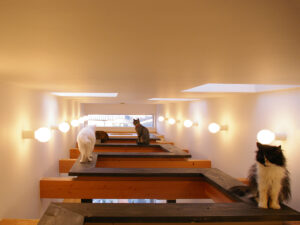
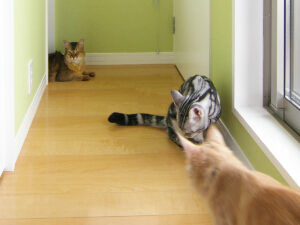
I was privileged to visit the Cats\' House in autumn 2009. The aspect that left the deepest impression was the countless aerial pathways, walkways, and tunnels that crisscross the entire two-story structure at varying heights. This network of cat pathways represents the pinnacle of good design — merging functionality, aesthetics, and a wealth of delight. The most striking feature is a sinuous "cat walkway" that passes overhead at ceiling height through the central stairwell — a brilliant display of the house\'s feline residents, their coats in various colors, lounging languorously from above. Hirose explained that these pathways provide cats with "vertical" movement space from an animal behavioral perspective, as well as room to roam. The latter is especially important given the concentration of so many animals in one space. After all, cats have their own hierarchies, and ample dispersed space allows the weaker members to evade the stronger ones — even to hide and not be found. In theory, this reduces conflict — and conversations with the owner confirmed this, resulting in significantly reduced stress for all residents.
"The Cats' House" [Dominic Young] 2/2
Other design elements throughout the house similarly balance aesthetics with function: a water bowl positioned at floor level with continuously refreshed drinking water; and acrylic tube partitions — simultaneously isolating cats from certain zones while maintaining visual continuity. Overall, the house is comfortable and stylish, and judging from how well the 16 cats have adapted, it has clearly been embraced by its "residents." It is foreseeable that demand for such concept homes will continue to increase in the future. Perhaps one day, a typical human-centered house will seem unsuitable to any serious cat lover. [Dominic Young]
"モダン建築に動物が呼び込むバロック性" [樋口ヒロユキ] 1/3
"The Baroque Quality That Animals Bring to Modern Architecture" [Hiroyuki Higuchi] 1/3
建築家廣瀬慶二(1969年生)の作品は、外観上、現代日本住宅の典範に見える。しかし、室内に一歩入れば、その印象は一変する。
本来スライディングドアが用いられるべき場所に、かごのような格子ドアが設えられている。柱には粗い縄が巻きつけられている。そして、およそ人間の目線の高さで、細長い板が空中回廊のように架けられている。
これらの細長い板状の通路は建物全体を貫き、壁に当たる場所ではトンネルのように開口して隣の部屋へつながる。
これらの通路は、ところどころで、簡略化された螺旋階段のような奇妙な柱体と連結される。さらに、これらの螺旋階段は天井を貫いて二階に達し、再びそこで空中回廊に接続する。これらの通路に面する壁と天井には、小窓が所々に穿たれている——あたかも「通路を歩いていて、ふと外の様子が気になったから、この場所に窓を開けてみた」とでも言わんばかりである。
結局のところ、本来は視線を遮断すべき戸を格子戸に置き換え、同じく視線を遮断すべき天井と壁を多孔質にして、その中に空中回廊と螺旋階段を張り巡らせた建築である。迷路のような、遊園地のような外観を呈している。
この奇異なほど透明で多孔質の空間を動き回っていると、人はある種の「視線の遊び」に巻き込まれてしまう。
しかし、同時に廣瀬建築はほぼ直線だけで構成されており、極めてシンプルな設計である。装飾と呼べるものは何もない。彼の手による建築は、構造上は奇矯であるが、表面は禁欲的にすら見える。
では、彼の建築内部の、装飾上は禁欲的でありながら、構造上は極度に遊戯的であるというこの特性を、何と呼べばよいのだろうか。
それはバロックではないかと思うのである。
The work of architect Keiji Hirose (born 1969) presents an exterior that looks like the very model of a modern Japanese house. But the moment you step inside, that impression is completely transformed.
Where sliding doors should ordinarily be used, cage-like lattice doors have been fitted; rough rope is wrapped around the columns. And at roughly eye height, slender boards are laid across like aerial corridors. These long, narrow pathways run through the entire house; where they meet a wall, a tunnel opens and connects to the next room.
In places, these pathways connect to strange columns that resemble simplified spiral staircases. What's more, these spiral staircases penetrate the ceiling and reach the second floor, where they reconnect to the aerial corridors. Along the walls and ceilings facing these pathways, small windows have been pierced here and there — as if to say, "I was making my way along the corridor and felt a sudden curiosity about what was outside, so I opened a window here."
In essence, his architecture features doors that should obstruct the view replaced by cage-like lattice; and ceilings and walls that should likewise obstruct the view given a porous structure riddled with openings and windows — through which aerial corridors and spiral staircases run in every direction. It has the appearance of a labyrinth or an amusement park. Moving through this strangely transparent, porous space, one becomes caught up in a kind of "play of gazes."
Yet at the same time, Hirose's architecture is composed almost entirely of straight lines: a simple design. There is nothing that could be called decoration. The architecture of his hand is structurally peculiar, but its surfaces are ascetically plain.
Now, what should we call this characteristic of his architecture's interior — ascetic in decoration, yet extraordinarily playful in structure? I would call it Baroque.
"モダン建築に動物が呼び込むバロック性" [樋口ヒロユキ] 2/3
"The Baroque Quality That Animals Bring to Modern Architecture" [Hiroyuki Higuchi] 2/3
一般に、モダン建築の特徴は機能性と大量生産性にあり、ロンシャンの礼拝堂などの例外を除いては、曲線や曲面を好まない。ましてや多孔質で遊戯的な構造や螺旋階段などは、モダニズムとは相容れない。多孔性や遊戯性、螺旋形を好むのは、むしろバロック建築である。換言すれば、廣瀬の建築は、外観上は近代的で素朴であるが、内部構造は極めてバロック的である。
では、なぜ廣瀬は、モダニズム的な建築にバロック的な遊戯性を導入したのか。
その答えは動物にある。
実は廣瀬は、動物の行動学に通じた、とりわけペットの生態に精通した建築家であり、彼が設計する建築は、ペットの問題行動を防止するための構造を取り込んでいるのである。
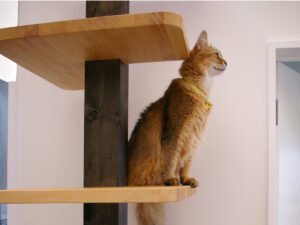
柱に巻きつけられた粗い縄は、猫が爪を研ぐためのものであり、
空中回廊や螺旋階段は、猫が移動するための高速道路なのである。
スライディングドアに代えて格子戸が用いられることも、不規則に壁と天井に開かれた穴も、
ペットの心理に対する配慮から生じたものである。
完全室内飼いを強いられた場合、動物はストレスを抱え、しばしば問題行動を示すようになる。
いたるところに開かれた小窓も、こうしたストレスの発生を防ぐために考案されたものである。
廣瀬建築のバロック的な遊戯性は、動物が生命体として有する遊戯性を建築に取り込んだ後、必然的に生じた帰結なのである。
このような設計手法——動物の行動学に基づいた設計——を、廣瀬は「Fauna+DeSIGN」と名付けた。
人間の論理だけでなく、動物の視点をも取り込み、この両者の折衷を見つけ出す、そういう建築である。
動物という生き物は、人間が規定する合理的な行動の枠を決してはみ出さない。その動物と共生するために必然的に導入されるバロック性——それが廣瀬建築を規定する法則である。
「住むための機械」というモダニズムの公理を守りながら、遊戯性に富んだ彼の建築は、不知不識のうちにポストモダン建築となっているのである。
In general, modern architecture is characterized by functionality and mass-producibility, and — with exceptional works like the Chapel of Ronchamp aside — it dislikes curves and curved surfaces. Still less is modernism compatible with porous, playful structures or spiral staircases. It is Baroque architecture, generally speaking, that favors such porosity, playfulness, and helical forms. In other words, Hirose's architecture, despite its modern, plain exterior, contains an interior structure that is extremely Baroque.
So why did Hirose introduce Baroque playfulness into modernist architecture? The answer lies in animals.
In fact, Hirose is an architect deeply versed in animal behavior — particularly the ecology of pets — and the architecture he designs incorporates structures designed to prevent problem behaviors in pets. The rough rope wrapped around the columns is for cats to sharpen their claws; the aerial corridors and spiral staircases are highways for the cats to travel.
The use of lattice doors instead of sliding panels, and the irregular openings in walls and ceilings, also reflect consideration for the psychology of pets. When confined in an interior space, they suffer from claustrophobic stress and often exhibit problem behaviors. The windows pierced everywhere are also designed to prevent this kind of stress.
The Baroque playfulness of Hirose's architecture is a necessary product of incorporating the playfulness that is essential to animals as living beings. He names this kind of design — based on ethology — Fauna+DeSIGN: architecture designed not only by human logic, but by bringing in the animal's perspective as well, and finding a synthesis of the two.
Animals simply do not live within the bounds of the rational behavior that humans prescribe. The Baroque quality that is necessarily introduced in order to coexist with them — that is the law that defines Hirose's architecture. While observing the modernist axiom of "the machine for living," his architecture, rich in playfulness, is an unwitting work of postmodern architecture.
"モダン建築に動物が呼び込むバロック性" [樋口ヒロユキ] 3/3
"The Baroque Quality That Animals Bring to Modern Architecture" [Hiroyuki Higuchi] 3/3
では、ペットと暮らす習慣を持たない顧客が、彼の下で家を設計させたとしたら、どうなるのか。
実のところ、廣瀬の建築には、子供だけが座ることのできるスペースがしばしば見られるのである。
階段やメゾネットの手すりの下には、膝壁のない隙間が設けられており、そこに子供が座ることができるようになっているのである。
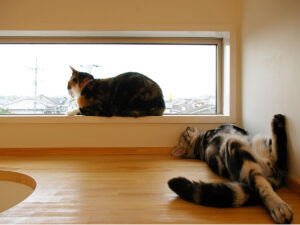
また、廣瀬は子供のいる家族の家を設計する場合、意図的に窓を低い位置に配置する。
子供たちは、大人にとっては単なる階段の段である場所に座り、大人が俯瞰することのできない窓から外を眺めながら育つ。そしてそこに「遊びの種」が埋め込まれている。
廣瀬の建築は、様々な高さから凝視されることを前提として設計されているのである——子供の視線、動物の視線、そして様々な角度から。
彼は、動物の目の高さ、子供の目の高さ、大人の目の高さを考慮し、それぞれの高さから何度も何度も吟味検討した後に、設計を完成させるのである。
動物たちはこれらの装置を通じて遊び、ストレスを軽減し、平穏さを取り戻す。
子供たちは成長の過程で室内に埋め込まれた「遊びの種」を発見し、それで遊び、成長するにしたがって異なる景色と出会う。
子供がなく、ペットもいない成人家族の顧客であったとしても、この遊戯性は変わらない。
立つのと坐るのでは全く異なる表情を見せる廣瀬の建築は、豊かな視覚的遊戯性に満ちている。
この多層的な遊戯性が、彼の建築の基底をなす中核テーマとなっているのだ。
廣瀬慶二の建築は、基本的にはモダニズムの枠組みの中で構想されており、一見奇異に見える構造も、すべて動物の問題行動を防止することを目標として、合理的に導き出された帰結である。
しかし、同時に彼の建築には常に「遊び」が潜在している。
動物たちのために、子供たちのために、そして遊びの心を持つ大人たちのために——
彼の建築は、彼ら為に設計されているのである。
合理性への志向と並行して、非合理的な「遊び」への欲求が常にどこかに存在する——それが人間の人生である。
合理性と遊び心の欲求に同時に応答する、モダンでありながらもバロック的な建築形態。
それが廣瀬慶二の建築なのである。
[樋口ヒロユキ]
Now then — what would happen if a client with no habit of living with pets commissioned a house from him?
In fact, Hirose's architecture often features spaces where only children can sit. Beneath the railings of staircases and mezzanines, he deliberately leaves gaps without knee walls, so children can perch there. Hirose also intentionally places windows low when designing homes for families with children. Children grow up sitting in places that are mere stairways for adults, and gazing out of windows positioned where adults cannot peer in. These are "seeds of play" embedded in the architecture for children.
Hirose's architecture is also designed on the premise that it will be seen from a variety of angles — the gaze of children, the gaze of animals, and many other perspectives. His architecture has visual devices that change their expression depending on the height of the viewer. He considers the eye level of animals, the eye level of children, and the eye level of adults, and completes his designs by examining them from all these angles.
Animals play through these devices, relieving stress and regaining calm. And children, in the course of growing up, discover the "seeds of play" embedded in the interior, play with them, and as they grow, encounter different views. Even if the client is an adult household with no children and no pets, this playfulness remains unchanged. Hirose's architecture, which shows an entirely different expression when standing versus sitting, is filled with a rich visual playfulness. This multi-layered playfulness is the central theme that forms the foundation of his architecture.
The architecture of Keiji Hirose is fundamentally conceived within the framework of modernism, and even structures that appear strange at first glance are rationally derived from the goal of preventing problem behaviors in animals. Yet at the same time, his architecture always contains "play" somewhere. For animals, for children, and for adults with a sense of play — his architecture is designed for them.
Alongside the drive towards rationality, the desire for irrational play always exists somewhere — that is human life. A modern yet Baroque architectural form that responds simultaneously to both rationality and the desire for play. That is the architecture of Keiji Hirose. [Hiroyuki Higuchi]